

Blast Room Doors: The Pros and Cons of Swing, Bi-Fold, and Rubber Roll Up
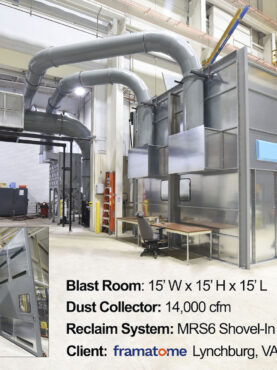
When designing doors for a blast room enclosure, Titan engineers take into consideration your space constraints, how you’ll be using the blast room (for example, will you require end-to-end drive-through), and your budget.
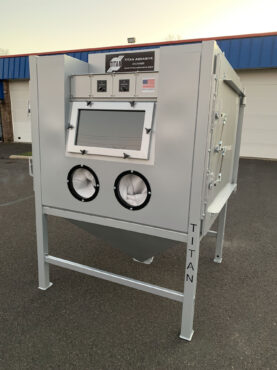
Titan relies on three types of doors for our custom blast rooms: Swing, Bi-Fold, and Rubber Roll Up. Each door type has its advantages and disadvantages.
Swing Doors: Ideal for smaller blast rooms and budgets
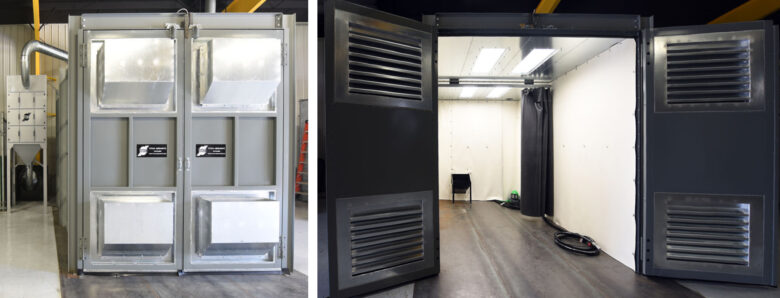
Titan Swing Doors are constructed of 2” tube frame and 14-gauge sheet metal for sturdiness and durability. Door hinges are heavy duty steel for long-lasting performance.
A durable P-Seal rubber gasket is added to the bottom of the doors to minimize abrasive dust leakage. Air inlet louvers are also added.
Swing doors are very durable and easy to repair; they’re also the ideal choice if you have a tight budget but ample floor space.
Swing Doors
Pros
- Lowest cost
- Simplest design
- Excellent sealing against dust leakage
- Very durable
- Easy to repair
Cons
- Requires significant floor space
- Slower loading / unloading
- Forklift operators can accidentally hit doors
Best for…
- Budget-conscious customers
- Smaller size blast rooms
- Facilities with ample floor space
Bi-Fold Doors: Great for frequent loading and unloading
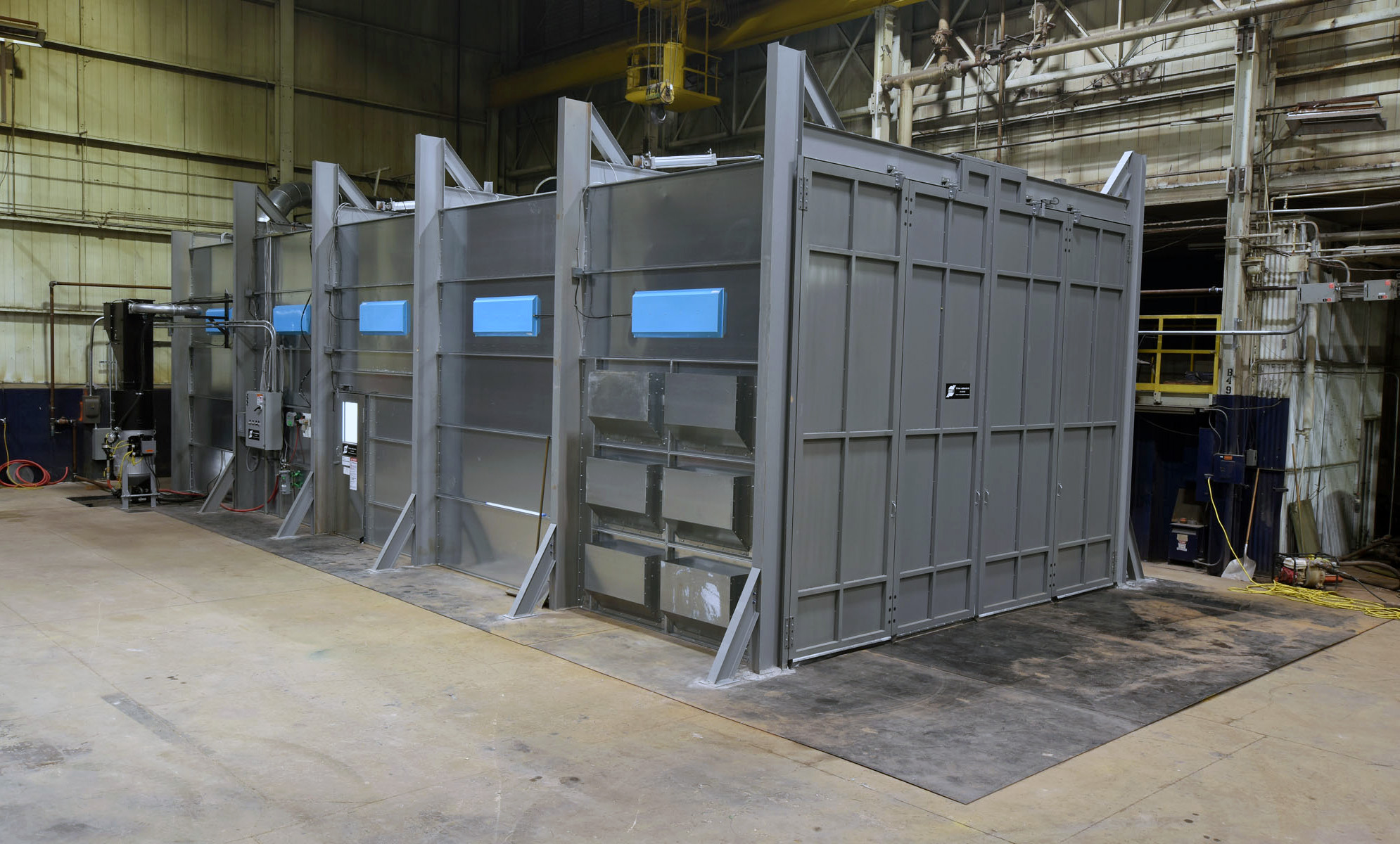
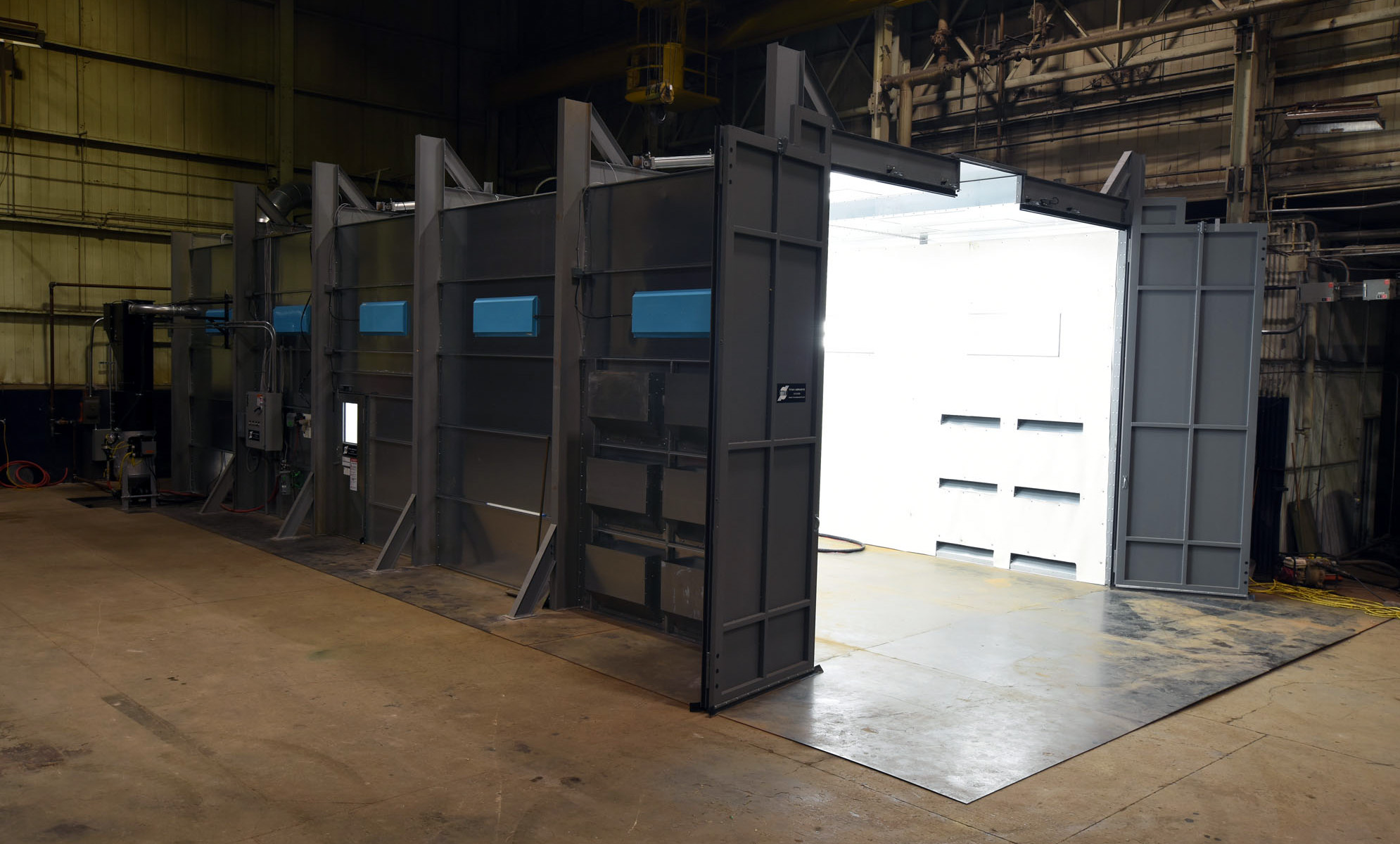
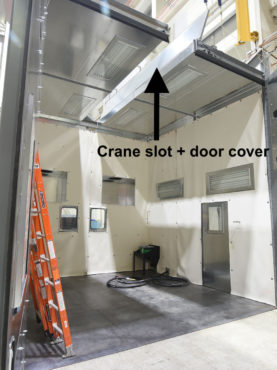
A Titan blast room with Bi-Fold doors; note the crane access center top
Similar to Swing Doors, Bi-Fold doors are constructed of 2” tube frame and 14-gauge sheet metal for sturdiness and durability.
For larger rooms, which require larger doors, Bi-Fold doors are easier to open – making them ideal if you plan on frequently loading and unloading parts. They also require less space than Swing doors and provide excellent sealing.
Bi-Fold Doors
Pros
- Require less floor space than swing doors
- Easier to open for larger rooms
- Good visibility and access
- Excellent sealing
Cons
- More expensive than Swing Doors
- Additional hinges and linkage require maintenance
- More complex fabrication
Best for…
- Medium to large blast rooms
- Customers with moderate space constraints
- Frequent loading and unloading
Rubber Roll Up Doors: For when space is limited
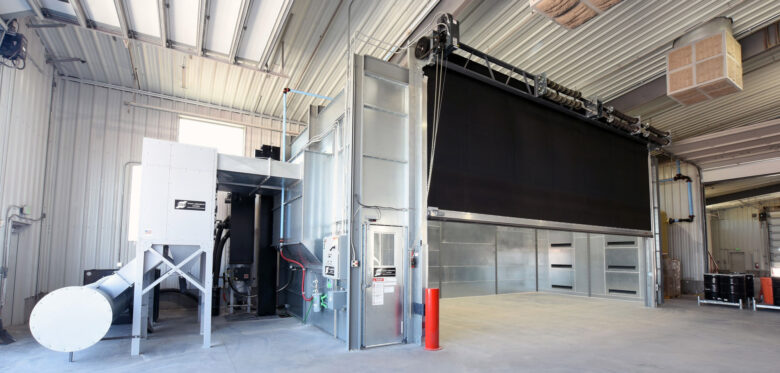
Made from ¼” thick rubber, the Rubber Roll Up door saves considerable space – and resists impact damage from forklifts.
Although much heavier than Swing or Bi-Fold doors, Rubber Roll Up doors deliver fast operation – opening and closing at 18” per second. It’s one reason they’re chosen for high-production environments where throughput is a priority.
Titan’s Rubber Roll Up doors come with a built-in light curtain for safety, and an optional thru-beam photo eye that detects movement and activates reverse-to-open (the way your garage door works). In case of power failure, the chain hoist can be used for manual operation.
Rubber Roll Up Doors
Pros
- Fastest operation
- Minimal floor space required
- Excellent for forklift traffic
- Flexible curtain resists impact damage
- Ideal for automation and production environments
Cons
- Highest cost
- Curtain eventually wears and requires replacement
- More maintenance (rollers, guides, curtains)
Best for…
- High-production environments
- Large blast rooms
- Automated blasting systems
- Customers prioritizing throughput
All Titan blast room doors come standard with Safety door limit switches; when the booth doors, or personnel door, are opened, blasting stops.
Swing and Bi-Fold doors are standard with all Titan blast enclosures and can be designed to include overhead crane access; Rubber Roll Up doors are an optional upgrade and cannot be used with overhead crane slots.
For additional information, see the Titan Custom Blast Room page.